Why Most Companies Get Branding Wrong (And How to Fix It)
Your brand is your reputation, whether you define it or not
We frequently get asked why most companies get branding wrong, especially by leadership teams in growing companies. It’s a fair question because brand is one of those concepts that feels both intuitive and difficult to define at the same time.
On the surface, it’s easy to point to visible elements like your logo, your website, and your messaging. But those are simply expressions of something much bigger. Brand is the culmination of how your business operates and how it is experienced. It reflects your mission, your purpose, your values, your culture, and the way your team shows up every day. It’s your reputation in the market when you’re not in the room.
At its core, brand is the deliberate creation of a clear and consistent perception about your business. It’s what people say about you, what they feel when they interact with you, and ultimately why they choose you over alternatives. At Authentic®, we define a brand as the promise an organization makes to the world and how the world experiences the delivery of that promise.
That definition matters because it highlights something many organizations overlook. Brand is not owned just by marketing, it’s reflected in every interaction, including sales conversations, proposals, customer experiences, and internal decisions that shape how the business shows up. This is why building a strong brand isn’t a project you complete, but a discipline you commit to.
Why most companies get branding wrong
In many organizations, branding is approached as a milestone. There’s a moment where the team decides it’s time for a refresh, and the focus quickly turns to updating visuals, refining messaging, and launching something new to the market.
Those efforts can be valuable, but they often happen before the organization has done the deeper work required to support them. Once the new materials are launched, teams tend to fall back into familiar patterns. Leadership may describe the business one way, sales may position it another, and marketing may communicate something slightly different.
Over time, those small inconsistencies add up. This usually isn’t intentional. It happens because there isn’t a shared, clearly articulated understanding of what the brand represents and how it should be expressed.
I’ve seen these inconsistencies play out in real time during leadership workshops. You can be halfway through a session and ask a simple question like, “How do we describe what we do?” or “What makes us different?” and the room gets quiet. Then the answers start coming, and they’re all slightly different. The nuance is interesting, but the lack of alignment is telling. Those differences may seem small internally, but externally they can create confusion and erode trust.
Where companies begin to fall into what we refer to as random acts of marketing. These are well-intentioned activities that lack cohesion, consistency, and connection to a larger strategy. In many cases, organizations try to compensate by increasing marketing activity or spend, without addressing the underlying issue of brand clarity.
Brand is a system, not a deliverable
When a brand is working the way it should, it creates alignment across the organization. It connects how leadership thinks about the business, how sales communicates value, how marketing engages the market, and how customers experience the company.
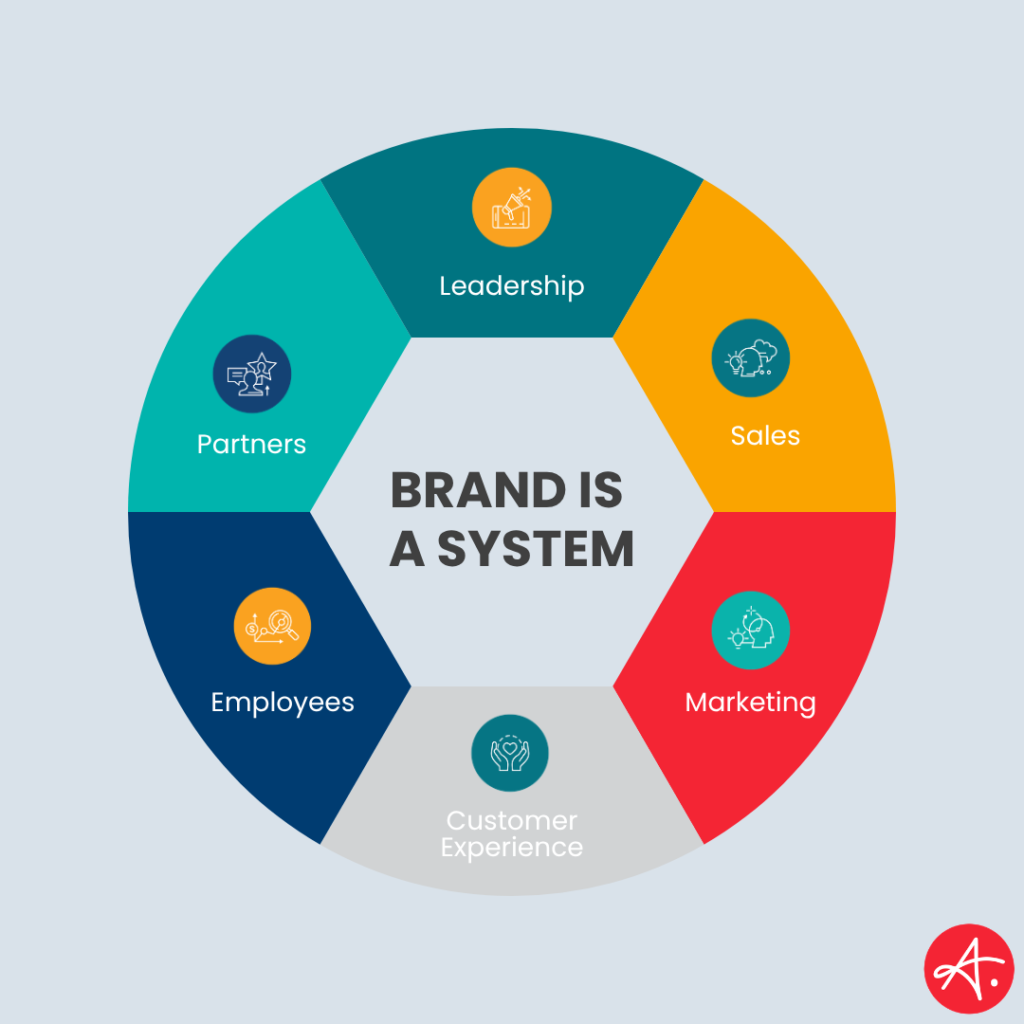
For this reason, the brand is treated as a foundational component of marketing within the Authentic Growth® Methodology rather than a surface-level exercise. Without a clearly defined and consistently delivered brand, everything downstream becomes more difficult. Messaging fragments, campaigns lose effectiveness, and the customer experience becomes inconsistent. Brand is where strategy becomes tangible and where intention turns into execution.
What doing branding right actually looks like
In practice, doing branding well is structured, intentional, and highly collaborative. It’s not about jumping straight into creative. It’s about building a foundation of truth and alignment before anything is expressed visually.
In my client work, that typically starts with discovery and input gathering. We look at existing research, conduct interviews, and create opportunities to hear directly from the people who experience the business. That includes clients across the spectrum. New customers who can clearly articulate why they chose the company, long-standing clients who understand the value over time, and most importantly, former clients who can provide insight into where expectations weren’t met or where the experience broke down.
Those conversations are often where the most meaningful insights come from. Not always the easiest conversations, but some of the most valuable. In parallel, we engage employees across the organization. Not just leadership, but a mix of roles, levels, and tenures. We use interviews, workshops, surveys, and existing feedback to understand how the brand is experienced internally and how it is being delivered every day.
From there, we bring those insights into working sessions. Messaging workshops are a key part of the process, and often there are several of them. These sessions are designed to align language, challenge assumptions, and ensure that what we are building reflects both the reality of the business and where it wants to go.
We also evaluate how services and solutions are named and positioned. In many organizations, naming evolves over time without a clear structure, which can create confusion both internally and externally. Clarifying that structure is an important part of building a cohesive brand.
Only after that foundation is in place do we move into messaging development, tools, templates, and visual identity. At this point, the brand is not being invented. It is being clarified, aligned, and expressed.
Brand is a team sport (and that includes the right partners)
This branding process reinforces something important. Brand is not owned by one team, but shaped by leadership, employees, clients, and partners. That’s why the most effective branding efforts are collaborative.
Agencies bring valuable perspective from working across multiple brands and industries. They help translate strategy into messaging and creative that is clear, differentiated, and relatable. At the same time, strong leadership is essential to ensure the work stays grounded in the business. An Authentic Fractional CMO™ plays a critical role here, providing direction, aligning stakeholders, and connecting the work across leadership, marketing, sales, and external partners. When this combination is working well, the brand becomes something the organization can actively live and deliver.
From definition to adoption: making the brand stick
Defining the brand is only part of the work. Making it stick is where the real impact happens. During rollout, I spend a lot of time focused on practical application. Can people clearly explain what the company does? Do they understand what differentiates it from competitors? Can they communicate that consistently?
We build this time into the process. Teams practice messaging with each other, with colleagues outside their department, and even with friends or trusted contacts. The goal is to refine how the story is told until it feels natural and consistent. This consistency is where the brand starts to move beyond documentation and into everyday behavior.
Why brand personality matters more than you think
One of the areas where alignment becomes especially important is in defining brand personality. While it is sometimes treated as a stylistic choice, it plays a significant role in how trust is established.
In one organization I worked with, it was essential that the brand convey authority, depth of experience, and rigor. Their audience expected proof points, structure, and a clear sense of expertise. Every interaction needed to reinforce that credibility.
In another organization in a similar space, the audience valued a more approachable and conversational style. Their audience responded better to plain language and real-world experience than to polished messaging.
Both organizations were highly capable. What differed was how that capability needed to be expressed in order to resonate with their audiences; that is the role of brand personality. It aligns how you communicate with how your customers define trust.
Bringing the brand to life through experience and design
While the work does not start with visuals, visual identity plays an important role in how the brand is experienced. Your brand should feel representative of who you are as an organization.
Consistent use of color palettes, fonts, imagery, and templates helps reinforce that identity across every touchpoint. From initial conversations and presentations to deliverable documents and even invoices, each interaction contributes to how your brand is perceived.
Equally important is how your team communicates. Every conversation should reflect the brand authentically so that the experience feels consistent from start to finish.
The hidden benefit: brand creates operational efficiency
One of the more practical benefits of a well-defined brand is the efficiency it creates across an organization, which should be an intentional objective from the start.
When teams do not have a shared foundation, they often spend unnecessary time recreating materials, searching for information, or piecing together messaging from past work. Sales teams, in particular, may find themselves pulling together proposals using a mix of outdated content and personal variations. With a clearly defined brand, that changes.
In a recent rollout, we developed a comprehensive brand guide that included messaging by persona, industry, and service. That messaging translated directly into brochures, presentations, proposals, and onboarding materials.
It also reduced the need for teams to rebuild proposals from scratch, search through old files for the right messaging, or recreate explanations of services for different audiences. It created consistency in how emails, presentations, and client communications were developed, and made onboarding new employees more efficient by giving them a clear and structured understanding of how the company communicates.
Once everything is established, maintaining it becomes just as important. Creating a centralized source for brand materials ensures that teams always know where to go for accurate and up-to-date information. Assigning ownership and governance helps keep it current and ensures the brand continues to work effectively over time.
Why this matters for growth
All of these brand elements ultimately tie back to growth. When a brand is unclear, growth becomes more difficult and more expensive than it needs to be. Sales cycles can lengthen, messaging can become inconsistent, and marketing efforts may struggle to connect.
When a brand is clear and aligned, it creates cohesion that supports more effective execution. Sales conversations become more focused, marketing becomes more efficient, and customers are able to understand and engage with your value more quickly. Growth becomes more intentional and more predictable.
The connection to Overcome Random Acts of Marketing®
At Authentic®, we help companies Overcome Random Acts of Marketing®, and brand plays a central role in that effort.
Random acts of marketing are often a symptom of a lack of clarity. When there isn’t a shared understanding of who the company is, who it serves, and how it creates value, different parts of the organization fill in those gaps in different ways. The result is inconsistency and disconnected efforts.
When a brand is clearly defined and consistently applied, it provides the structure needed to ensure that marketing efforts are cohesive and aligned with business objectives. Which is why brand is such a critical component of the Authentic Growth® Methodology.
Brand is never “done”
Building a brand takes time, discipline, and a willingness to continuously listen and evolve. It is not something that can be completed once and set aside. Whether you define your brand or not, your customers are already forming perceptions based on their experiences. The real question is whether those perceptions are being shaped intentionally or left to chance.
Want to start a conversation around how to fix your brand? Reach out to us today.